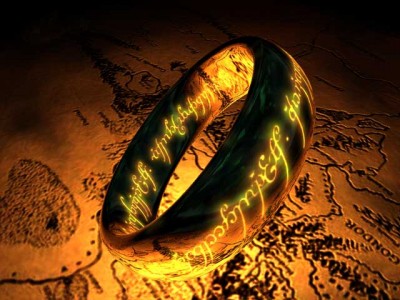
Today is a wonderful day for us all! We celebrate today Mary's "yes" to God - the day the Word became Flesh and dwelt among us!


"Throughout the ages, there have been so-called ‘private’ revelations, some of which have been recognized by the authority of the Church. They do not belong, however, to the deposit of faith. It is not their role to improve or complete Christ’s definitive revelation, but to help live more fully by it in a certain period of history. Guided by the magisterium of the Church, the sensus fidelium [collective sense of the faithful] knows how to discern and welcome in these revelations whatever constitutes an authentic call of Christ or his saints to the Church. Christian faith cannot accept ‘revelations’ that claim to surpass or correct the revelation of which Christ is the fulfillment, as is the case in certain non-Christian religions and also in certain recent sects which base themselves on such ‘revelations’" (Catechism of the Catholic Church 67).


"Bring them to me," said his father, "that I may bless them." (Now Israel's eyes were dimmed from age and he could not see well.) When Joseph brought his sons to him, he kissed and embraced them. Then Israel said to Joseph, "I never expected to see your face again, and now God has allowed me to see your descendants as well!"Joseph removed them from his father's knees and bowed down before him with his face to the ground. Then Joseph took the two, Ephraim with his right hand, to Israel's left, and Manasseh with his left hand to Israel's right, and led them to him.
What fun!
And I do wish more people would give the girls books for Christmas and birthdays. They have too many toys as it is, but there are never too many books - just too few bookshelves.
And in the end, he gets to keep the dog, in spite of the fact that because of him, the dog was attacked. It's a wreck, and my explanations to Big Girl about why I didn't like the book (which I read when we watched the movie) only brought her to tears. She can't understand why it's so bad. "It's FICTION!" she continues to cry to me. Yes, but when I realized that the movie and the book were so similar, I was sorry I let her read it. The role model in the book breaks several big Commandments, and is rewarded in the end!
And so I was trepidatious about Harriet and Terebithia, despite both being considered great children's literature.
I have now nixed Harriet the Spy. Harriet spies on her friends and various people in town - sneaking all over, hiding in bushes - and then writes about them in her notebooks. The girl is absolutely fanatical about routine and about the notebooks. She is, quite simply, addicted to the notebooks. Her obsession is revealed after the contents of her writing is discovered by her friends, who discover that she's been writing mean-spirited things about them all. They keep her notebook, and the next morning, she leaves early for school so she can buy a new one and continue writing. She cannot function without the notebooks. (It's actually very sad.) She is sorry, but not for hurting anyone, and not for spying on people, and certainly not for writing such nasty things. She is only sorry that people looked insider her notebook when it said "PRIVATE" on the front cover. She is actually angry and feels that it's not her fault that everyone is hurt by her actions and words. In the first section of the book, she has a nursemaid who winds up leaving to get married. She is heartbroken, as the nurse (Ole Golly) was like a mother to her. When Harriet's world is crashing down around her, her parents try contacting Golly to get her to talk to Harriet about what has happened. Golly tells her that she must always be true to herself. Sometimes, she tells her, people will get hurt by the truth, so she has to decide if she wants to apologize or just tell a lie. Small lies are good if they spare people's feelings. (I kid you not, it says this.) Now, Golly tells Harriet, use your spying to write stories because you wanted to be a writer.
Harriet winds up being rewarded in the end for her dispicable actions. (What is to be expected in a book where God is not mentioned even once? What is there to regret if you only tell the truth? Who cares if it's only opinions and not necessarily the truth?) Harriet winds up being the editor of her grade's page of the school newspaper. She starts using her spying to tell stories (still mean-spirited) about people in town that she has been sneaking around on. Everyone loves her stories for the paper, her friends accept her back without question (or apologies or even Golly's other suggestion: lies), and all is well.
Harriet is a spoiled brat who is mean and nasty. Harriet does not change her ways. Harriet is rewarded for being a spoiled brat who is mean and nasty.
Great message.
Then Terebithia, which I really wanted to read a LOT. First of all, the story is beautiful. Really, really lovely. I actually cried - make that sobbed - at the end of the book. But the reason I'm now trepidatious about this book is the language. There were multiple uses of "hell", "damn", and the Lord's name in vain (which is actually a bit mild, as in "Lord!", but I know will bother Big Girl a bit). And let's not forget the use of the term "bitchin'", as in "they start bitchin' at you for breaking crayons." These are completely unnecessary, and it is a real shame for them to be in there. That said, the book is definitely for a more mature child - probably upper elementary at the earliest, if you can stand the language - because of the death of a character in the book. (Which explains my sobbing last night.) I want to watch the movie before I decide about the book. I might - maybe - read it to the girls in preparation for watching the movie, as long as the language is a bit more tame in the film. I know Walden Media will have stuck to the book closely, in spite of the girl looking wrong, because that is just what they do. But, again, I was caught off-guard by the language, and I'm glad that I decided to preview the book first.
One more thing. Our family movie this weekend (did you think I'd forgotten?) was The Rookie with Dennis Quaid. What a really wonderful film! The story (a true one) was really inspirational, and everyone loved it.
I have two problems with it, though. (Gosh, I look like a real complainer here, eh?) The Rookie is rated G. Yet in one of the early scenes, we are treated to an ass-grab - CLOSE UP! Holy cow, I don't do that to my husband near the kids, why on earth do I need them to see that filling the entire TV screen???!!!??? And there were a few "damns" and "hells" in there, too. People, this movie is rated G, and I felt like I should have screened it first. It's completely unfair that such material is in a G-rated film. Can't I watch anything with my children without being assaulted by inappropriate material any more?? Why should I have to screen a movie that is for "General Audiences" to be sure I don't get a full-screen shot of someone's butt being grabbed (right at the crotch, mind you!)???? I dang-near fell off the couch, I was so shocked!
From now on, I think I'm going to have to stick to movies made before 1960 for family movie night. At least Pollyanna and Mary Poppins didn't have innuendos and ass-grabbing. Neither did Briggadoon. Yes, we'll be looking for old musicals for next week. Or maybe Charlie Chaplin. It's getting harder and harder for me to trust that a family film is really that.
And, as far as books go, I'll be looking into getting For the Love of Literature by Maureen Wittmann as soon as possible. I need some help in getting decent books that protect my girls' innocence and still challenge them.


In the Harry Potter novels, Christian elements and images are found everywhere, because the author had every intention of telling a fundamentally Christian story. She was trying, for all her faults as a writer or philosopher, to cooperate with grace. In His Dark Materials, Christian elements creep in only because Pullman could not successfully block out the light of Christ completely, despite his best efforts to do so. By way of analogy, Satan cannot rid himself of his own being, intelligence and will (all gifts of God and testimonies to His glory) without ceasing to be altogether. This hardly means that Satan "means well". Evil is *always* parasitic on good and must always, to some degree, pay tribute to it. Pullman's evil work is no exception. That does not mitigate the fact that it is evil.
That is one of the best explanations I've read on this! If I'm feeling better and stronger spiritually, I might pick up the books sometime just to see. But I make no plans on giving them to my children, as I think giving them such blatantly anti-Catholic books would only serve to confuse their young minds. (For the record, I'm not afraid of them hearing or reading things that are not Catholic, but I limit it severely right now, when they are still developing their consciences. When they are older and better equipt to deal with themes such as these, I see no reason to keep those ideas from them. After all, if I insulated them from anything non-Catholic, we'd rarely leave the house, and they certainly wouldn't be involved in most of their activities.)
(Update: Below, I have added a link to Paul's post on the topic and inserted the link to the L.A. Times article. Sorry for leaving that out the first time.)Pullman has not been shy in the past about verbalizing his beliefs — or, some might say, nonbeliefs — and his intentions in writing the "Dark Materials" novels.
The novelist has said they are in response to C.S. Lewis' "The Chronicles of Narnia," the popular children's fantasy series of which "The Lion, the Witch and the Wardrobe" is the first book — written by Lewis to teach Christian ideals to kids.
"I loathe the 'Narnia' books," Pullman has said in previous press interviews. "I hate them with a deep and bitter passion, with their view of childhood as a golden age from which sexuality and adulthood are a falling away." He has called the series "one of the most ugly and poisonous things" he's ever read.
One amazingly dim piece I read on the movie (and books) was from the L.A. Times. It contained this bit of "logic":
Pullman's refutations aside, Catholic theology in the books is depicted as sinister and the villains are often cardinals and priests. The "Church," or the "Magisterium," answers to the "Vatican Council," and kidnaps children, tortures witches and aims to suppress all natural impulses and control the world. In one book, "Dust" is described as the physical manifestation of Original Sin.In the film, however, there's no mention of the Church or Catholicism. The bad guys are known only as the Magisterium, which in fact is the term the Roman Catholic Church uses to describe its body charged with interpreting "the Word of God." Weitz, who described himself on one fan site as "a lapsed Catholic crypto-Buddhist," explained those changes to fans in 2004 as a way to allay the studio's early concern that the "perceived anti-religiosity" of "His Dark Materials" would make the franchise "an unviable project."

Suddenly Christoper Robin began to tell Pooh about some of the things: People called Kings and Queens and somthing called Factors, and a place called Europe, and an island in the middle of the sea where no ships came, and how you make a Suction Pump (if you want to), and when Knights were Knighted, and what comes from Brazil. And Pooh, his back against one of the sixty-something trees, and his paws folded in front of him, said "Oh!" and "I didn't know," and thought how wonderful it would be to have a Real Brain which could tell you things. And by-and-by Christopher Robin came to an end of the things, and was silent, and he sat there looking out over the world, and wishing it wouldn't stop.
But Pooh was thinking, too, and he said suddenly to Christopher Robin:
"Is it a very Grand thing to be an Afternoon, what you said?"
"A what?" said Christopher Robin lazily, as he listened to something else.
"On a horse," explained Pooh.
"A Knight?"
"Oh, was that it?" said Pooh. "I thought it was a --- Is it as Grand as a King and Factors and all the other things you said?"
"Well, it's not as grand as a King," said Christopher Robin, and then, as Pooh seemed disappointed, he added quickly, "but it's grander than Factors."
"Could a Bear be one?"
"Of course he could!" said Christopher Robin. "I'll make you one." And he took a stick and touched Pooh on the shoulder, and said, "Rise, Sir Pooh de Bear, most faithful of all my Knights."
So Pooh rose and sat down and said "Thank you," which is the proper thing to say when you have been made a Knight, and he went into a dream again, in which he and Sir Pomp and Sir Brazil and Factors lived together with a horse, and were faithful Knights (all except Factors, who looked after the horse) to Good King Christopher Robin ... and every now and then he shook his head, and said to himself "I'm not getting it right." Then he began to think of all the things Christopher Robin would want to tell him when he came back from wherever he was going to, and how muddling it would be for a Bear of Very Little Brain to try and get them right in his mind. "So perhaps," he said sadly to himself, "Christopher Robin won't tell me any more," and he wondered if being a Faithful Knight meant that you went on being faithful without being told things.Then, suddenly again, Chrsitopher Robin, who was still looking at the world, with his chin in his hands, called out "Pooh!""Yes?" said Pooh."When I'm --- when --- Pooh!""Yes, Christopher Robin?""I'm not going to do Nothing any more.""Never again?""Well, not so much. They don't let you."
Pooh waited for him to go on, but he was silent again."Yes, Christopher Robin?" said Pooh helpfully."Pooh, when I'm --- you know --- when I'm not doing Nothing, will you come up here sometimes?""Just Me?"
"Yes, Pooh."
"Will you be here too?"
"Yes, Pooh, I will be, really. I promise I will be, Pooh.""That's good," said Pooh."Pooh, promise you won't forget about me, ever. Not even when I'm a hundred."Pooh thought for a little."How old shall I be then?""Ninety-nine."Pooh nodded."I promise," he said.Still with his eyes on the world Christopher Robin put out a hand and felt for Pooh's paw."Pooh," said Christopher Robin earnestly, "if I -- if I'm not quite --- " he stopped and tried again --- "Pooh, whatever happens, you will understand, won't you?""Understand what?""Oh, nothing." He laughed and jumped up to his feet. "Come on!""Where?" said Pooh."Anywhere," said Christopher Robin.* * *So they went off together. But wherever they go, and whatever happens to them on the way, in that enchanted place on the top of the Forest, a little boy and his Bear will always be playing.

Some of the articles and talks I've written are to do with the subject of religion, which I think is a very interesting one. The religious impulse – which includes the sense of awe and mystery we feel when we look at the universe, the urge to find a meaning and a purpose in our lives, our sense of moral kinship with other human beings – is part of being human, and I value it. I'd be a damn fool not to.
But organised religion is quite another thing. The trouble is that all too often in human history, churches and priesthoods have set themselves up to rule people's lives in the name of some invisible god (and they're all invisible, because they don't exist) – and done terrible damage. In the name of their god, they have burned, hanged, tortured, maimed, robbed, violated, and enslaved millions of their fellow-creatures, and done so with the happy conviction that they were doing the will of God, and they would go to Heaven for it.
That is the religion I hate, and I'm happy to be known as its enemy.
From time to time I have a new thought on the subject. When I come up with something worth writing down, I'll put it here.