Showing posts with label faith. Show all posts

Monday, December 27

Tuesday, September 21

Something to be Proud of

I've been asked a couple of times about why I insist on a Catholic curriculum, especially when it comes to history and science. Not often, but I was thinking about this recently.

The biggest reason I've stuck with Catholic-based history and science is because I want my girls to be proud of their Catholic heritage.

When I was in school - and it was public school - there was little discussion of the Catholic Church. But the few things that my history classes taught me about my Church in history included that we were the aggressors in the Crusades, Luther was heroic for standing up to a Church that sold indulgences (and let you buy your dead relatives out of Hell - I don't recall if Purgatory was mentioned), and the Catholic Church persecuted scientists like Galileo and Copernicus (and that the Church was and is, in general, anti-science).

When I started educating my girls, I wanted to have a Catholic perspective in education. I wanted them to have a Catholic school at home, basically. And it was then, reading their elementary school textbooks from Seton, that I learned the truth about many things I thought I knew from my public school history classes.


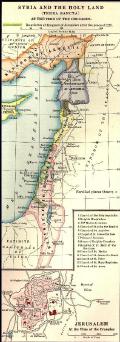
The Crusades were less about attacking Muslims than they were about helping pilgrims make safe journeys to and from the Holy Lands. And, incidentally, the Holy Lands were Catholic places before Mohammed came along and started terrorizing people. (Yes, I used that word. I mean it. Conversion by the sword has never been a part of Catholicism, but it is called for specifically in the Koran.)

Luther disregarded doctrines within the Catholic Church that he didn't like much, and his separation was not heroic. It tore the One, Holy, Catholic and Apostolic Church in half. The separation of the Orthodox Church was bad enough. But Luther was a monk! He broke his vows and lead people away from the Church. Indulgences were never sold (not by decree or permission from the Church, anyway; if it happened, it was done by rogue priests who were abusing their positions and vocations). And an indulgence isn't about "getting someone out of Hell." That's impossible. And purgatory is about as misunderstood as indulgences are. (For a good explanation of indulgences, I recommend Catholic Answers' site. Most Catholics couldn't explain them to you, which is why, when I mentioned to my father this tidbit of information, he couldn't explain why the description in my textbooks were wrong. So I offer two links: the first is a primer on indulgences, and the other debunks some of the myths about this ancient - and current! - practice of granting indulgences. Trust me, it's worth the read to have a better understanding of the idea.)

And the most surprising thing I've learned is that not only has the Church not persecuted scientists, but She's had quite a few in her own clergy! (Here is an excellent summary on Galileo, the ignorants' favorite example.) I didn't know until quite recently that Gregor Mendel was an Augustinian priest!

But my girls know these things. They're learning them as we learn about the famous people who make up our Western Civilization's history. They're learning that the first religious ceremony in what would become the United States was a Catholic Mass. They're learning that Florida, Mexico, South America, and the western areas of the United States were explored by Catholic nations and had countless missions dotting the wild frontier. They're learning that there were brave priests and sisters and brothers and nuns who came to this country to serve others and set up schools (long before the government was in the business of education) and offer hospital care and feed the poor.

What they're learning is what I did not learn until I was an adult.


To be Catholic is to have something to be proud of. Our Catholic heritage is rich. It's full of amazing people and wonderful discoveries and moving tales of charity and love and forgiveness. (Read some of the stories about the French Jesuits who were tortured by the Indians and begged to be sent back to be missionaries so they could save souls. Read about those who came after them and became martyrs, not because they were cruel or slave-masters, but because they would not abandon their Lord. And then read about the conversions that were made possible by tireless religious who risked their lives to share the Good News with those who had never heard it before!)

So what I am giving my children - what they gain from studying science and our history from a Catholic perspective - is something to be proud of. They'll hold their heads up when they say they're Catholic because they will have learned the truth:

The Catholic Church has done some pretty wonderful things. It's like a well-kept secret, but I'm determined to let that secret out!


Wednesday, September 1

Humanae Vitae

I'm planning on reading Humanae Vitae with my seventh-grader this year in conjunction with her quarter-long study of St. Gianna Molla. I, myself, only read the encyclical a couple of years ago, and I'm trying to work through some Theology of the Body materials, as well. So in light of that, I'm looking for a study guide on HV that I can use with a 12 year old.

In my searchings, I found a guide by Priests for Life, which looks good but probably would be way more than I need with my daughter. Then I saw this article at the bottom of the first page of search items on Google.

Basically, it's an ultra-Traditionalist (probably a St. Pius X) priest who is discussing how while Humanae Vitae certainly did come to the right conclusion, it's bad for couples and the Church. What really cracked me up is that he could NOT get away from the Mass in the Ordinary Form (which was originally called "Novus Ordo" because it was a new form of the Mass). I found it kind of amusing (and sad) that all things lead back to the Mass. All the ills of the Church can be traced back to Mass in the venacular! No one can be seriously prayerful at such a Mass! Priests have no dignity of vocation any more! (I'd like to see my very-holy pastor's reaction to that!)

Please remember breakaway Catholics in your prayers. They need Mother Church, and Mother Church, naturally, wishes for them all to come home. Just like she wishes for all Christians to come home.


Wednesday, August 11

Perfect Intellect and the Blessed Virgin Mary

Our family prayed the Rosary last night, and while meditating on the Sorrowful Mysteries, I tried to ask God to help me develop certain qualities - ones that would help me be a better imitator of our Lord and His Blessed Mother.

I was meditating on the Agony in the Garden, and I thought about how I need to learn to submit to God's Will in my life. I need to be less selfish - less of a control freak - and trust God. This is what Jesus did during His Agony; He submitted Himself to the Will and the Plan of the Father.

As I meditated more, I thought of His Blessed Mother's submission to the Will of God. Her assent - her fiat - was perfect. Her will was in union with God's. Submission was a pleasure for her, and this was helped by the fact that her soul did not carry the scars of Original Sin. For an explanation of this important doctrine of the Catholic Church (called the Immaculate Conception), Catholic Answers offers, in part, the following:

The Immaculate Conception
It’s important to understand what the doctrine of the Immaculate Conception is and what it is not. Some people think the term refers to Christ’s conception in Mary’s womb without the intervention of a human father; but that is the Virgin Birth. Others think the Immaculate Conception means Mary was conceived "by the power of the Holy Spirit," in the way Jesus was, but that, too, is incorrect. The Immaculate Conception means that Mary, whose conception was brought about the normal way, was conceived without original sin or its stain—that’s what "immaculate" means: without stain. The essence of original sin consists in the deprivation of sanctifying grace, and its stain is a corrupt nature. Mary was preserved from these defects by God’s grace; from the first instant of her existence she was in the state of sanctifying grace and was free from the corrupt nature original sin brings.
When discussing the Immaculate Conception, an implicit reference may be found in the angel’s greeting to Mary. The angel Gabriel said, "Hail, full of grace, the Lord is with you" (Luke 1:28). The phrase "full of grace" is a translation of the Greek word kecharitomene. It therefore expresses a characteristic quality of Mary.
The traditional translation, "full of grace," is better than the one found in many recent versions of the New Testament, which give something along the lines of "highly favored daughter." Mary was indeed a highly favored daughter of God, but the Greek implies more than that (and it never mentions the word for "daughter"). The grace given to Mary is at once permanent and of a unique kind. Kecharitomene is a perfect passive participle of charitoo, meaning "to fill or endow with grace." Since this term is in the perfect tense, it indicates that Mary was graced in the past but with continuing effects in the present. So, the grace Mary enjoyed was not a result of the angel’s visit. In fact, Catholics hold, it extended over the whole of her life, from conception onward. She was in a state of sanctifying grace from the first moment of her existence. ...

(For the exact definition, broken down bit-by-bit with explanations, see the Catholic Encyclopedia at the New Advent site.)

Because Mary was conceived without Original Sin, she was in a better position to accept God's Divine Will and to align her own desires with His. Instead of her judgement being clouded by the aftereffects of The Fall, she was able to remain without sin throughout her life.

Which led me to ponder further...

When Adam and Eve were created, they had an enlightened intellect. In other words, they had innate knowledge of God and His Will. They could freely choose to accept or reject this (and we all know how that ended up), but they knew full well what that Will was. It was the sin of Pride that led to the Fall, hence "Pride comes before the Fall." But, make no mistake, they were smart enough to know what they were doing. Our intellects are not clear, they are not complete. Our intellects are like broken bones that are not quite healed properly. We are weak, our souls are weak, and our wills are weak. Anyone who thinks they are different is wrong, for even Saint Paul lamented that he was unable to avoid sinning (Romans 7:15).

But Mary - she was preserved from Original Sin, pre-emptively given the very Salvation that Christ Jesus would offer to us all. This is a basic belief that the Church has held since the earliest days of Christianity. Catholic Answers points to St. Irenaeus' writings in the Second Century:

"Consequently, then, Mary the Virgin is found to be obedient, saying, ‘Behold, O Lord, your handmaid; be it done to me according to your word.’ Eve, however, was disobedient, and, when yet a virgin, she did not obey. Just as she, who was then still a virgin although she had Adam for a husband—for in paradise they were both naked but were not ashamed; for, having been created only a short time, they had no understanding of the procreation of children, and it was necessary that they first come to maturity before beginning to multiply—having become disobedient, was made the cause of death for herself and for the whole human race; so also Mary, betrothed to a man but nevertheless still a virgin, being obedient, was made the cause of salvation for herself and for the whole human race. . . . Thus, the knot of Eve’s disobedience was loosed by the obedience of Mary. What the virgin Eve had bound in unbelief, the Virgin Mary loosed through faith" (Against Heresies 3:22:24 [A.D. 189]).
"The Lord then was manifestly coming to his own things, and was sustaining them by means of that creation that is supported by himself. He was making a recapitulation of that disobedience that had occurred in connection with a tree, through the obedience that was upon a tree [i.e., the cross]. Furthermore, the original deception was to be done away with—the deception by which that virgin Eve (who was already espoused to a man) was unhappily misled. That this was to be overturned was happily announced through means of the truth by the angel to the Virgin Mary (who was also [espoused] to a man). . . . So if Eve disobeyed God, yet Mary was persuaded to be obedient to God. In this way, the Virgin Mary might become the advocate of the virgin Eve. And thus, as the human race fell into bondage to death by means of a virgin, so it is rescued by a virgin. Virginal disobedience has been balanced in the opposite scale by virginal obedience. For in the same way, the sin of the first created man received amendment by the correction of the First-Begotten" (ibid., 5:19:1 [A.D. 189]).

So if the Blessed Virgin Mary was without sin - and without the broken-ness that comes from being born with Original Sin on one's soul, does this mean that she, too, had a perfect intellect, as Eve did before the Fall?

If you know, please, point me towards some information on this. It's fascinating to me that Mary might have had the same perfect intellect that our First Parents had!


Tuesday, August 10

Anniversaries and Times and Seasons and Prayers

This Saturday is our anniversary: 17 years! My sweet husband likes to add, "16 of them happy," with a wink, making a reference to my two agonizing pregnancies.

It's hard to believe we've really been married for 17 years now. December will mark 20 years of being together as a couple. That is half my life.

Time is a funny thing. When we're young, it crawls by so slowly, you wish for Superman to come along and speed things up a bit. A school year to a first grader is an eternity. And that's not surprising since one year is 1/5 of his life! As a child in elementary school, going from Christmas to Christmas takes forever (especially when the purple and pink candles come out - it's doubly slow then!), but as adults, it seems to sneak up on us a little faster each year. My anniversary seems to be just a few weeks back, but here it is, mid-August again!

If we think back on our lives as children, we see how hard it was to wait for anything we
wanted. We looked forward to being older, getting to do more things, and those years of waiting were dreadfully long. Big Girl, for example, is one of the few children in her age group at church who doesn't have a cell phone. She's been asking again and again when she can get one. Now this is a topic Travel Man and I talked about when we first started seeing teens with cell phones. We had decided that until the girls are working, they don't need one. Scratch that. Make it this: Until they are DRIVING, they don't need one. Period. And even then, maybe they only need to borrow it sometimes.

So our answer was this, "When you turn 16, we'll start talking about it." (Notice that independent clause: start talking about it.)

This elicited the following reaction:

"WHAT????!!!!????" (Please imagine it starting at a high pitch and rising as the one-syllable word becomes something more like a long note sung.)

See, Big Girl is nearly 12, and four years before the discussion even starts is 1/4 of her life. To us, it seems like it's just around the corner. To her, it's NEVER GOING TO GET HERE.

About the only way that helps me understand this idea of time when I'm dealing with little girls - or, really, not-so-little girls - is to think about being with my husband.

It's been 20 years since we started dating. Half my life. And, frankly, I barely remember what it was like without him. A little bit, but not a lot.

Basically, it's like ... forever. It's as though he's never not been such an intregal part of my life.

Imagine how much more our little annoyances with waiting amuse God, who is Eternal. No beginning, no end. A day is like a thousand years. How He must chuckle at our indignant answer when He tells us to wait before He answers a prayer.


"WHAT????!!!!????"

I'm sure that Him asking us to wait for something is in our best interest, but we are like children: we can't see it.

When I pray, I must remember that there are three answers to my prayers:

  1. Yes. We like this best. It is when we pray for something that is beneficial to us - to our souls, especially - that we get this answer. Of course, being our Father in Heaven, God also likes to give good gifts to His children. Not all "Yes" answers are purely for our spiritual benefit. Some are just because we're getting a nice present from Daddy.
  2. Wait. We like this, but not nearly as much as "Yes." After all, we're like our own children, who when they are told they must wait until Christmas morning to open presents Grandma sent last week (and Christmas is three weeks away), sit and stare longingly at the presents under the tree, occasionally begging again to open it now. But sometimes, the wait is worth it. And sometimes, we aren't really ready for that "Yes." Oh, we think we are. We're very grown-up, you know. But what we are, sometimes, is that 12 year old asking for permission to drive the car. The 12 year old thinks she's a great driver. We happen to know a bit better.
  3. No. This is the answer that so few people like to talk about, and none of us really like. Oh, sure, deep down we understand that God has other things in store for us. Better things. But no child likes being told no. Even if you're asking for a pony and you live in the middle of suburbia. Even if you're asking if you can bring home the baby bear you found rummaging in the trashcan outside your rural mountain home. But God, being a Good Father, knows what's best for us. He has to tell us "No" sometimes.
What's really tough for us, as His children, is seeing the difference between God's "Wait," and His "No." Sometimes we are certain that He's said no. And we whine about it. We cease actually praying for our intention, but instead complain. Now, if it's a "wait," often there is a reason, like Christ perfecting the Samaritan woman's request, testing her motives and faith. As a mother, I do this sometimes, making sure that my children have good intentions behind a request, or even that they really do want the thing they're asking for.

God is the perfect Father! He will do the same for us. However, just as I will know the girls really want what they're asking for by listening to them ask (politely) again, God will also allow us to ask him repeatedly for our intentions.

However, if instead of polite requests I get whining and complaints, I am WAY less inclined to give in. Ever. Can our reaction to our children be that vastly different than God's?

So, I remind myself here that I must approach my petitions to God with reverence. I must always remember to take a good look at my own motivation for asking. Is it for good reasons? Am I asking for something that will be spiritually beneficial, or am I asking for the equivalent of a pet bear cub?

And, when God's answer seems to be "no," I must also re-evaluate and see if my petition is, indeed, appropriate. If I'm asking Jesus for a pony while I'm living in an apartment or for a pet cat that I'm terribly allergic to, I need to accept His "no" and move on. But if it is, I should do as Jesus instructed and persist, purifying my motivations and faith along the way. And I need to remember that just like it's 1/4 of Big Girl's life before we even begin discussing a cell phone, God's time is not my time, and His ways are not my ways. I might have a bit of a wait until I hear "Yes" from my Father in Heaven.


Wednesday, June 16

In Which I Try a How-To

A nice commenter said that perhaps I'd try my hand at some how-to stuff.

Obviously, a stranger. I sometimes feel like I'm simply stumbling through life. But I do manage to hold on, and I try hard to maintain a positive attitude.

I've been working on an idea for my first how-to, and I'll be updating soon with that post. First, though, I have to get through this week, wherein I am without Little Girl and Travel Man, but am hosting my niece and (for tonight) two other girls. Big Girl wanted to have a pool party/sleepover in honor of her Big Cousin's visit, and so there we are. Only thing we're missing is that we can't go to Mass tonight; it seems Father is out of town and he didn't even okay it with me. Hmph!

So watch this space for a how-to. And have a blessed weekend.


Friday, May 7

After the Argument

Apologizing isn't as hard as you think. Most of the time, the other person is ready to do the same. They might lack the courage to be so humble. So be brave, step up, and say "I'm sorry."

You just might be surprised at how easy it will be.

And if you still lack courage, seek it in Confession, which is a fine way to first find forgiveness for your anger, and then gain the graces necessary to be as humble as you must be to apologize without excuses or justifications for your actions.

Be not afraid.


Friday, April 16

Happy 83rd Birthday, Holy Father!


This video is from last year, but we can still pray for the Holy Father. By the way, don't forget to pray the novena for our Holy Father, Pope Benedict XVI. The Knights of Columbus have the prayer here, and a printable PDF (six to a sheet) here. Even if you haven't prayed so far, it's never too late to say a prayer for the Vicar of Christ!

If you prefer, here's a video of the Supreme Chaplain guiding us through the novena prayers:


Monday, April 5

Holy Week: Evening Mass of the Lord's Supper


Holy Week was really awesome for me. I was going through Lent, reading my three books each day, but not feeling particularly ... um, holy? No, not right. Closer to God? Probably a bit closer there. But I pushed on. Got back to praying the Rosary more often, but still not back to my every-day mode. (I'll continue to work on that.)

But then Holy Week came - or, more specifically, the Triduum.

Our family always attends the Triduum. Easter Vigil is my favorite Mass of the entire year, and I think it could only be improved if we had a wedding at the Mass, as well. But this year, the entire Triduum really moved me and made the somewhat drier time of Lent worth it.

First, Holy Thursday came. In the past at our parish, the foot washing wasn't done properly. Everyone could have their feet washed, everyone could volunteer to wash feet, and Father did not do much of it. I did not participate, at first because I was unprepared (I'd never seen that done before), and then later because I realized it wasn't proper to do it this way. However, this year, Father K. had the various ministries in our parish chose two people (either two in the ministry or a husband and wife) to have their feet washed; Travel Man and I were asked by the Justice and Peace ministry. We discussed, we thought, and then we accepted.

Yes, I know ... vir means MEN, but we both did it anyway. Deal.

Anyway, it was going to be a bit of a penance for me. I hate feet. Hate 'em. Don't like touching them, don't like having mine touched. I once got a manicure and pedicure as a birthday present from my sister, and I traded the pedicure for a second manicure. So even the idea of having water poured over my foot and having it dried off was a bit ... weird. But what happened to me during Mass on Thursday was much more than that.

When we got up and went to our chairs for the washing, Travel Man was one of the men in charge of placing the chairs on the lowest step going to the altar. Because he'd also be taking them away, he sat in one of the first places to be washed so that he'd be able to get up quickly and put chairs away. And because we sit on the opposite side of the church where Father K. started, I sat in the last chair.

At this point, I want to let you know (in case you've never been to Holy Thursday Mass - and it's something I highly recommend, even if you're not Catholic) what the Gospel reading is for Holy Thursday. It's the same in all three Liturgical Cycles.

Gospel

Before the feast of Passover, Jesus knew that his hour had come

to pass from this world to the Father.

He loved his own in the world and he loved them to the end.

The devil had already induced Judas, son of Simon the Iscariot, to hand him over.

So, during supper,

fully aware that the Father had put everything into his power

and that he had come from God and was returning to God,

he rose from supper and took off his outer garments.

He took a towel and tied it around his waist.

Then he poured water into a basin

and began to wash the disciples’ feet

and dry them with the towel around his waist.

He came to Simon Peter, who said to him,

“Master, are you going to wash my feet?”

Jesus answered and said to him,

“What I am doing, you do not understand now,

but you will understand later.”

Peter said to him, “You will never wash my feet.”

Jesus answered him,

“Unless I wash you, you will have no inheritance with me.”

Simon Peter said to him,

“Master, then not only my feet, but my hands and head as well.”

Jesus said to him,

“Whoever has bathed has no need except to have his feet washed,

for he is clean all over;

so you are clean, but not all.”

For he knew who would betray him;

for this reason, he said, “Not all of you are clean.”


So when he had washed their feet

and put his garments back on and reclined at table again,

he said to them, “Do you realize what I have done for you?

You call me ‘teacher’ and ‘master,’ and rightly so, for indeed I am.

If I, therefore, the master and teacher, have washed your feet,

you ought to wash one another’s feet.

I have given you a model to follow,

so that as I have done for you, you should also do.”

I love Saint Peter. He is my favorite saint because he spoke before he thought so often, and his love for Our Lord is so evident. When he met Jesus, he wasn't so sure who this Guy was, but once he got a glimpse, he went whole-heartedly with Him. He never looked back, even when he was being impetuous.

So there I sat, waiting for Father to come to me. He and the deacon moved together, with the altar servers following behind, handing him towels and taking the wet ones away. Because the church is curved slightly, I couldn't see Father until he was about halfway down the line of people. Then I noticed something.

He was not just kneeling before each person, but staying that way, crawling on his knees to each person to wash their feet.

The sight took my breath away. I looked at Father, whom I love and respect, and thought, "That's not right! He shouldn't be crawling to us like that! He shouldn't be doing this! We should be honoring him!"

And I got it. For the first time, I really got Saint Peter's reaction. I'd always known in my head that Peter thought it was inappropriate that the Lord should wash his feet, but it hadn't really internalized for me. I didn't know it in my heart the way I know it now. I looked down at Father as he approached my chair and thought, "No! This isn't right!" I worked hard to choke back my tears at that point. When he got to the person two chairs down from me, I noticed something else: as he finished drying her foot, he looked up into her eyes, smiled, and then moved on.

This was almost too much to bear. Now I was really fighting the tears. I asked Saint Peter to pray for me, so I could keep from crying. I did not want to cry up there.

When it was my turn, I noticed more. First, Father had made sure the water was warm. It was comfortable. Then, it wasn't just a matter of a little water being poured on my foot and wiped off. He acted as though I had dirt on my feet and he washed it. I think that if I had been wearing sandals and was grimy, my foot would have been clean at that point.

Humbling. Moving.

Never did I think it would be like that. I'm glad I said yes, because I learned something very important about Christ and Saint Peter and the apostles in that moment. And I was able to internalize another Gospel story in an entirely new way.

Saint Peter, pray for us!

Friday, March 26

Sick on Purpose

I think God was preventing me from getting myself any more upset than I already was this week. I joked with Travel Man that Obamacare made me sick because I had a fever Monday through Thursday at about noon.

Turns out, I missed Masses and the Mission all week, and according to my friends who went, it was a blessing. Content wasn't bad, but the Q&A sessions went in all kinds of directions, to the point that one exasperated woman stood up and asked, "Why are you even Catholic, then?"

I fantasize about Father Corapi being our Mission Leader for Lent. Or Father Groeschel. Some sort of priest who wears a habit or his clerics or something identifying him as a religious. Someone who still crosses himself when he passes a Catholic church and doesn't make snorting noises about the magisterium or say that Luke wrote St. John's Gospel or ad lib some of the prayers at Mass.

But in the meantime, I'll be in thanksgiving for our pastor, who told me today that he can't break Lenten fast on Sundays because he "feels like it's cheating." Who speaks out against cohabitation, contraception, fornication, masturbation, abortion, euthanasia, and who sings the Agnus Dei during his weekday Masses.

Remember, we need to pray for religious who are acting this way, not just be angry with them. Pray, children! Pray!


Thursday, March 25

Feast of the Annunciation


Today is a wonderful day for us all! We celebrate today Mary's "yes" to God - the day the Word became Flesh and dwelt among us!


Our salvation began on this day, the Annunciation (or Incarnation).


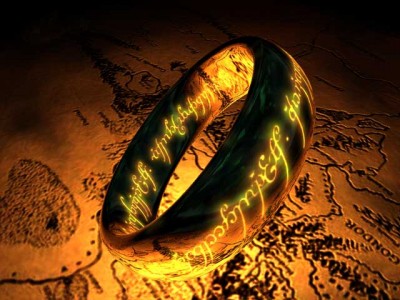
Side note: One of the very few days that Tolkien specifically names in The Lord of the Rings is this day, for it is this day that Frodo and Samwise were finally able to destroy the One Ring. Middle Earth's salvation began on that day.


Monday, February 22

Searching for the Garden of Gethsemane

I was looking for pictures or maps of the Mount of Olives, and I discovered a site called Jerusalem Shots. It's a site of photos of Jerusalem, and apparently it's organized by site. (Beautiful pictures, too.)

Well, I hit upon it while searching and found a picture of a beautiful tree from the Garden of Gethsemane. There are trees there that Our Lord prayed beneath during His Agony.


© Pes & Lev


But what really got me was the caption beneath the picture (emphasis mine):

The Mount of Olives (also Mount Olivet, Hebrew: הר הזיתים, Har HaZeitim; Arabic: جبل الزيتون, الطور‎, Jebel ez-Zeitun, Jebel et-Tur, "Mount of the Summit") is a mountain ridge to the east of Jerusalem. It is named from the olive trees with which its sides are clothed. At the foot of the mountain is the Gardens of Gethsemane where Jesus stayed in Jerusalem, according to tradition. The Mount of Olives is the site of many important Biblical events.

In the Book of Zechariah the Mount of Olives is identified as the place from which God will begin to redeem the dead at the end of days. For this reason, Jews have always sought to be buried on the mountain, and from Biblical times to the present day the mountain has been used as a cemetery for the Jews of Jerusalem. There are an estimated 150,000 graves on the Mount, including those of many famous figures. Just a few of these include the tomb of Zechariah (who prophesied there), Yad Avshalom, and a host of great rabbis from the 15th to the 20th centuries including Abraham Isaac Kook, the first Ashkenazi Chief Rabbi of Israel.

I am completely blown away.

God is so awesome. Just. So. Awesome.

The Dolorous Passion I


I've been reading The Dolorous Passion as my main Lenten reading. The beginning, as I mentioned, is not difficult to get through. It's amazing how much detail there is in the book. No, it's not Scripture or inspired. It's merely a private revelation, which the Church always gives us the option of accepting or not. Catholic Answers gives us a bit of an explanation (full text is at the above link):

"Throughout the ages, there have been so-called ‘private’ revelations, some of which have been recognized by the authority of the Church. They do not belong, however, to the deposit of faith. It is not their role to improve or complete Christ’s definitive revelation, but to help live more fully by it in a certain period of history. Guided by the magisterium of the Church, the sensus fidelium [collective sense of the faithful] knows how to discern and welcome in these revelations whatever constitutes an authentic call of Christ or his saints to the Church. Christian faith cannot accept ‘revelations’ that claim to surpass or correct the revelation of which Christ is the fulfillment, as is the case in certain non-Christian religions and also in certain recent sects which base themselves on such ‘revelations’" (Catechism of the Catholic Church 67).


These visions, then, are left up to us as to whether or not we wish to accept them. Blessed Anne Catherine Emmerich, however, was bound by them, since she was given them. (This site provides much more detail, and New Advent has information on the topic, as well, though their depth often proves a bit much for me. EWTN also has some information on private revelations here.)

Since we've declared Sundays in Lent to be (nearly) electronic-free - no computer, no Wii, no TV - I haven't posted yet on what I've read. I read through the first part of the book, which contains descriptions of the preparation for and the celebration of the Pasch. It ends with Jesus and the eleven (Judas had gone on to finish his betrayal of Our Lord) leaving the Upper Room and going to the Garden.

I mentioned it before: this part is the easiest to read. You are drawn into the story and drawn into the celebration. How could the Apostles have really known, even if Jesus Himself was trying to tell them, that so much could go so "wrong" in such a short time? No wonder they couldn't believe Him!

Some of the details were interesting, such as there being a portion of the Blessed Sacrament left and that it was stored - with a lamp lit nearby - in a space within the Upper Room. This setup gives the impression that perhaps that was the first church and that there was a Tabernacle there. I found this idea intriguing. It also reminded me of our own Holy Thursday Mass, when the priest consecrates enough hosts to remain for Good Friday services. (Good Friday and Holy Saturday are the only two days of the year that there are no Masses celebrated in any Catholic churches in the world. The Easter Vigil, because it begins well after sundown, is considered to be an Easter Mass.)

One thing that is standing out for me during this reading of the book is that Judas is presented as one who has been more and more dissatisfied with Jesus' non-action. To our human eyes, it doesn't seem that He is establishing His Kingdom: the House of David that will never fall, the Kingship that will never end. And Judas' impatience has driven a wedge between him and God.

How often are we this way? I know that there are times when I am impatient with God, when I want Him to just HURRY UP and do something. When I pray for something - something good and wonderful and right - only to be told, "Wait."

I don't want to wait. I'm like a small child in Toys R Us, pitching a fit and kicking on the floor, screaming, "I WANT IT NOW!!!"

But God's time is not ours, and we must all remember that. We can't be like that child. We can't be like Judas, trying to force our timing on God. Patience.

I've begun the next part of the book, as well, which begins with Jesus and his Apostles arriving at Mount Olivet, where Jesus begins to pray in the Garden of Gethsemane. This is where it becomes difficult and emotionally exhausting to read.

First, let me explain a little about that.

When you watch the movie The Passion of the Christ, there are visual elements you might miss. You can't see everything at once, or you might close your eyes at a painfully difficult part of the movie. But when you read about the Passion, you can't avoid it. It's all there, and it's all laid out in front of you.

When you're confronted with Jesus in the Garden, His soul nearly crushed with sorrow over our sins, it's painful to see. He suffers in Gethsemane because He sees the sins of humanity: from the fall of Adam to the end of the world. And when Sister Emmerich says that she sees her own sins among them, you realize that your own sins are there, too.

For me, I realize that my sins are there, and it hurts me to know that I've caused Our Lord this suffering. When Sister Emmerich speaks of those who reject the Faith or the Church, of those who blaspheme, of those who remain in the Church and yet wound her from within, I realize that I'm there. She sees my sins, too. Surely she did not see them as clearly as her own, but there they are.

And the thought that I would see my sins, laid out before me, knowing that they were a cause for the lashes on the back of my Savior, the nails in His hands and feet ... that is nearly unbearable.

When Jesus goes to his Apostles - Peter, James, and John - and finds them exhausted from fear and sleeping, I know this is how He finds me most of the time. Sleeping.

He is anxious, but still, He is their Shepherd. And He is gentle when waking them. "Could you not stay with me but an hour?"

Am I so gentle when I find my own children doing something aside from what I left them to do? This comes up and practically slaps me in the face. Even these great saints, these Fathers of the Church, were not perfect. Why do I expect more from others? Why do I expect so much less from myself?

∞∞∞∞∞∞∞∞∞∞∞∞∞∞∞∞∞∞∞∞∞∞

I'm still in the garden, as far as my reading goes, and it is rather difficult from here on out. I'll update again when I can. I need to take breaks from this book at times, and that's when I'll update from the other books I'm reading this Lent.

Have a blessed and fruitful Lent!

Friday, February 19

Keeping Desires in Check

Here is an explanation of "taking the discipline," a practice it has recently been revealed that Venerable Pope John Paul II participated in. Excellent education for us all! (Father Barron is with Word on Fire, where there are lots of wonderful videos on the Catholic Faith. If you have questions about Catholicism, it's a very good site to gain information and education.)


Found via Insight Scoop, where there are lots of excellent links for more information.

Thursday, February 18

What's Wrong with the World I


Not very far into this book just yet, but I definitely like Chesterton's beginning. I've read other books on fixing society - I do have a degree in education, you know, and education degrees contain nearly as much information on how to fix our students as how to teach them (or even content) - and Chesterton's observation that they start with all the problems and then lead up to the Grand Solution to Fix It All is dead-on.

However, he proposes that this is an incorrect way to go about fixing society. First, he says, we must know where we're going with society. What does a healthy society look like? If left to mere humans, we get about 4 billion different ideas. There must be a standard. After all, medicine has that standard of what a healthy body looks like, so doctors all have the same goal: get the body as close to that as possible.

I've yet to get into the second chapter here. I'm taking a little break this morning to work further into The Dolorous Passion. I'm still reading about the preparations for the Passover, so it's easier reading now. (Funny how we're gently brought into the story, and then it seems to go horribly wrong. That must be how the Apostles felt. Here we are, celebrating Passover. Jesus has really been talking about His death a lot lately, but this isn't a night for sadness! And then the Seder is different suddenly and Judas is leaving and John is more upset than anyone else and Jesus leaves before the fourth cup and we're going to the garden to pray. And the garden is quiet, but Jesus ... oh! Jesus what's happening to You? Why is Judas back...? And so reading this book is a lot like being present - a fly on the wall, if you will - at the Passion and Crucifixioin of our dear Lord. I'll write about it in its own post, as it deserves that.)

The weather is warming up here, and so I'm going to send the girls out to play before lunch - while the snow is still here - and take that opportunity to really start reading. A little music in the background, a cup of coffee by my side, and a book in hand.

Sounds about right to me.

Wednesday, February 17

Lenten Reading


I'm giving up certain parts of my online activities for Lent, and instead I'll be doing some spiritual reading.


First on my list is a book I've read before, but is very difficult for me to read (emotionally). It's The Dolorous Passion, which was the book that Mel Gibson read and used to "fill in" details between Gospel accounts when he made The Passion of the Christ (which we watch every Good Friday). Sister Emmerich was a mystic who had visions of Our Lord's Passion and Death and was asked to have them committed to paper before she died.


It is a very. tough. read.


So in between reading that, I'll be working on reading Mother Angelica's Private and Pithy Lessons from the Scriptures and What's Wrong with the World (Chesterton). This will be my first Chesterton book! (I'm a bit excited, especially after reading Dale Alquist's introductory book on Chesterton.)


Not that I think I'll finish all of those, but I do have a couple of other books on my list of things to read. First, there's The Imitation of Mary. It's another difficult read, if only that it forces me to face how far I have to go in order to be the kind of Christian I ought to be. Then I've also remembered that I've got another book that I started and sort of put aside: Introduction to Christianity, by then-Cardinal Ratzinger.


I'll try to post here about what I'm learning (and how I'm doing). I am really trying not to give myself too much to accomplish during Lent; as I learned a few years ago when I tried to do too much, that is just setting me up for failure. However, I am a voracious reader when I'm not occupying myself with time wasters online, so I do anticipate having enough time to get through at least the first three books, if not more. The biggie will be The Dolorous Passion. Like I said, it's a difficult read for me. It's emotionally exhausting. And it is an in-your-face reminder of why Jesus died and what He went through for me.


There are things I'm planning on doing aside from reading more. One that I've already made public is my commitment to participating more in 40 Days for Life. I plan on going (with the girls) to pray outside Planned Parenthood more often - hopefully once a week at a minimum - during this campaign. You, too, can participate in the 40 Days event, even if you aren't able to be there physically. We need prayers - lots of them - and those prayers can be quite powerful. If you can, pray and fast for us and for the 40 Days campaign. Really, you're praying and fasting for those mothers who are contemplating abortion, their children, and those people who work in the abortion clinics across the country.


[image sources: books, 40 Days for Life]

Thursday, January 28

Reminder to Self

"Leave at the door of the place where you are going to converse with God all extraneous thoughts, saying, with St. Bernard, "O my thoughts, wait here. After prayer we shall speak about other matters."

--St. Alphonsus Liguori



[quote via Daily Gracelines from Women of Grace]

Monday, January 4

What If I Fall Down There?


When I was in college, I had a professor who told us a story to illustrate how children see the world. He talked about the big sewer grates on St. George Street in St. Augustine, Florida, where Flagler College is located. He saw a small boy, probably about three or four, and the child was walking with his father. The boy stopped fearfully in front of one of the huge grates and held tight to his father's hand.

"Daddy," he asked, "what if I fall down in there?"

The professor stopped here and said, "It doesn't matter that physically the boy is too big to fall throught the grate. His kind obviously can't comprehend that. The father gave a perfect answer to this important question."

"If you fell down in there, I'd come in and get you," he said, and his son relaxed and felt it was safe to go on.

I recalled this story at Midnight Mass. Father K was talking about how God knew Man was in trouble, and He came for us - to save us. He is like the father on St. George Street, who calmed his son with the knowledge that he would save him if he were in trouble.


How God is like that with us!! Right from the Fall, God promised that Someone would come for us. Someone would come in and get us. All through the Old Testament, He makes this known again and again. "I'm coming down there to get you. Don't be afraid. Trust Me. I'm coming!"

This lesson should not be left in the past, though. When we're scared or on trouble, we must remember that God will come down and get us. He will lift us up. He will sustain us. He will help, even when we can't understand what He's doing.

Think about the boy. He trusted his father, but if he fell down the grate, he would be unable to see what measures his father was taking to get ready to come after him. And if the boy was crying loudly for help, it's also likely he wouldn't be able to hear his father calling down comforting words to him.

This is so much like when we pray for help from our Father in Heaven! We are so busy crying. We can't hear God answering us, trying to calm us. We do not trust Him enough.

This is a big lesson for me. I must learn to trust Him more. I must learn to listen for His comforting words while I wait for hte help that comes. Perfect help at the perfect time. HIS time. Not my own.

I have to remind myself that if I fall down in there, He will come down and get me.


Friday, December 25

Merry Christmas!


Happy birthday to our dear Lord!


Jesse Tree: December 25 (Christmas Day)

(Note: This is a series of posts from 2008.)


Merry Christmas! Above is our last Jesse Tree Ornament, which we'll hang this morning.

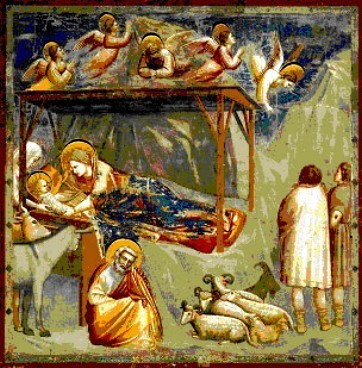
1 And it came to pass, that in those days there went out a decree from Caesar Augustus, that the whole world should be enrolled. 2 This enrolling was first made by Cyrinus, the governor of Syria. 3 And all went to be enrolled, every one into his own city. 4 And Joseph also went up from Galilee, out of the city of Nazareth into Judea, to the city of David, which is called Bethlehem: because he was of the house and family of David, 5 To be enrolled with Mary his espoused wife, who was with child.

6 And it came to pass, that when they were there, her days were accomplished, that she should be delivered. 7 And she brought forth her firstborn son, and wrapped him up in swaddling clothes, and laid him in a manger; because there was no room for them in the inn. 8 And there were in the same country shepherds watching, and keeping the night watches over their flock. 9 And behold an angel of the Lord stood by them, and the brightness of God shone round about them; and they feared with a great fear. 10 And the angel said to them: Fear not; for, behold, I bring you good tidings of great joy, that shall be to all the people:

11 For, this day, is born to you a Saviour, who is Christ the Lord, in the city of David. 12 And this shall be a sign unto you. You shall find the infant wrapped in swaddling clothes, and laid in a manger. 13 And suddenly there was with the angel a multitude of the heavenly army, praising God, and saying: 14 Glory to God in the highest; and on earth peace to men of good will. 15 And it came to pass, after the angels departed from them into heaven, the shepherds said one to another: Let us go over to Bethlehem, and let us see this word that is come to pass, which the Lord hath showed to us.

16 And they came with haste; and they found Mary and Joseph, and the infant lying in the manger. 17 And seeing, they understood of the word that had been spoken to them concerning this child. 18 And all that heard, wondered; and at those things that were told them by the shepherds. 19 But Mary kept all these words, pondering them in her heart. 20 And the shepherds returned, glorifying and praising God, for all the things they had heard and seen, as it was told unto them.

Gospel according to Saint Luke, Chapter 2, Verses 1-19


Who are your heros?

LinkWithin

Blog Widget by LinkWithin